The Lobbie PURE robot test
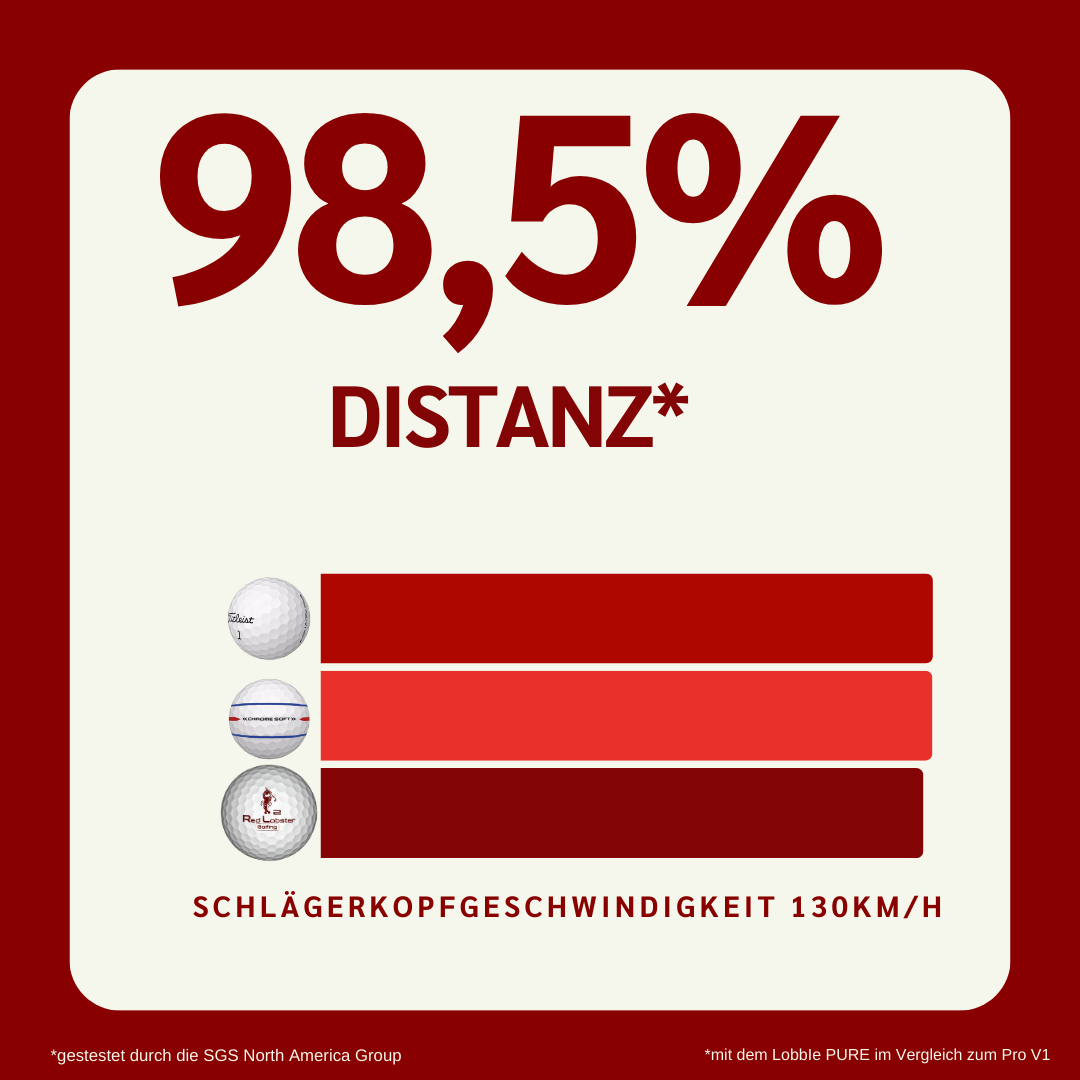
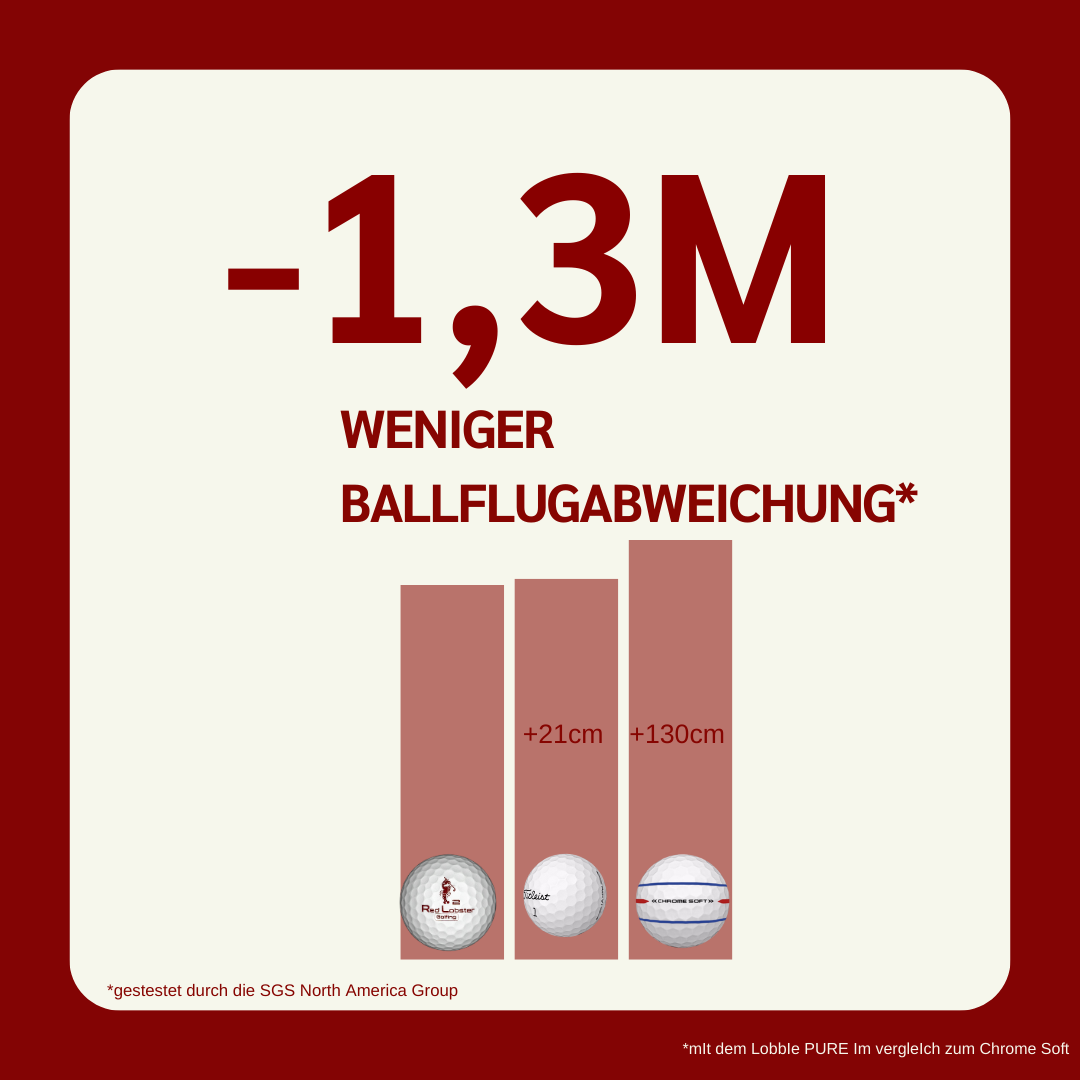
We put the Lobbie PURE through a detailed test and compared it with two leading premium tour balls (reference ball A and reference ball B). Our goal: to find out how the Lobbie PURE performs in the categories that matter most — distance and dispersion.
The data comes from an independent test by Golf Laboratories/SGS (2022). A hitting robot struck the balls at different club head speeds. Because the robot tested every ball under identical, controlled conditions, the results are objective and directly comparable.
The results below show how the Lobbie PURE performs on distance and dispersion — and give you a clear picture of how it stacks up against the two reference balls.
The data in detail
All figures come from an independent test by Golf Laboratories/SGS (2022). The Lobbie PURE was tested head-to-head against two established premium tour balls (reference ball A and reference ball B) — all balls under identical conditions (center-hit averages, dry ground).
Full swing — driver, approx. 94 mph club head speed
| Metric | Lobbie PURE* | Reference ball A | Reference ball B |
|---|---|---|---|
| Ball speed | 134.8 mph | 138.5 mph | 137.5 mph |
| Launch angle | 10.6° | 11.5° | 11.5° |
| Spin | 3,398 rpm | 2,713 rpm | 2,741 rpm |
| Carry distance | approx. 207 yd (189 m) | approx. 218 yd (199 m) | approx. 215 yd (196 m) |
| Total distance | approx. 228 yd (208 m) | approx. 244 yd (223 m) | approx. 239 yd (219 m) |
| Total dispersion | approx. 13.8 yd — tightest in the test | approx. 13.9 yd | approx. 15.1 yd |
Short game — wedge loft approx. 30°, approx. 81 mph
| Metric | Lobbie PURE* | Reference ball A | Reference ball B |
|---|---|---|---|
| Spin | 9,371 rpm — highest in the test | 8,607 rpm | 8,831 rpm |
| Ball speed | 104.2 mph | 105.5 mph | 105.5 mph |
| Launch angle | 21.3° | 22.6° | 22.4° |
| Carry distance | approx. 127 yd (116 m) | approx. 129 yd (118 m) | approx. 129 yd (118 m) |
The honest takeaway
- The short game is its strength: On the wedge shot, the ball produced 9% more spin than reference ball A and 6% more than reference ball B — more bite and a quicker stop on the green. That's exactly what the urethane cover is for.
- With the driver, the extra spin costs distance: Around 3,400 instead of ~2,700 rpm meant about 16 yards (15 m) less total distance than reference ball A in the test — but with the tightest total dispersion in the field.
* Ball speed, launch angle and spin taken directly from the data tables in the test report; distance and dispersion values read from the report's charts (±0.5 yd).